


SaaS development is the process of building software that customers access online through a subscription, such as a CRM, booking platform or project management tool. Compared with a one-off website, SaaS development needs user accounts, subscription billing, multi-tenant data, security and the ability to scale. This guide explains the costs, the right tech stack, essential features and seven steps to launch a SaaS product in 2026.
How much does SaaS development cost?
With an experienced offshore team, a SaaS MVP typically costs 25,000 to 60,000 USD and takes three to five months. A mature platform with integrations, analytics and mobile apps can pass 150,000 USD. Costs depend on features, integrations and design. Our custom software development cost guide explains each factor.
Choosing a SaaS tech stack
- Front end: React or Next.js for fast, interactive dashboards.
- Back end: Node.js, Laravel or Python (Django or FastAPI).
- Database: PostgreSQL for most products, with Redis for caching.
- Billing: Stripe or Paddle for subscriptions, invoices and tax.
- Hosting: AWS, Google Cloud, Vercel or DigitalOcean with automated backups.
- AI features: OpenAI or Claude APIs for smart search, summaries and automation.
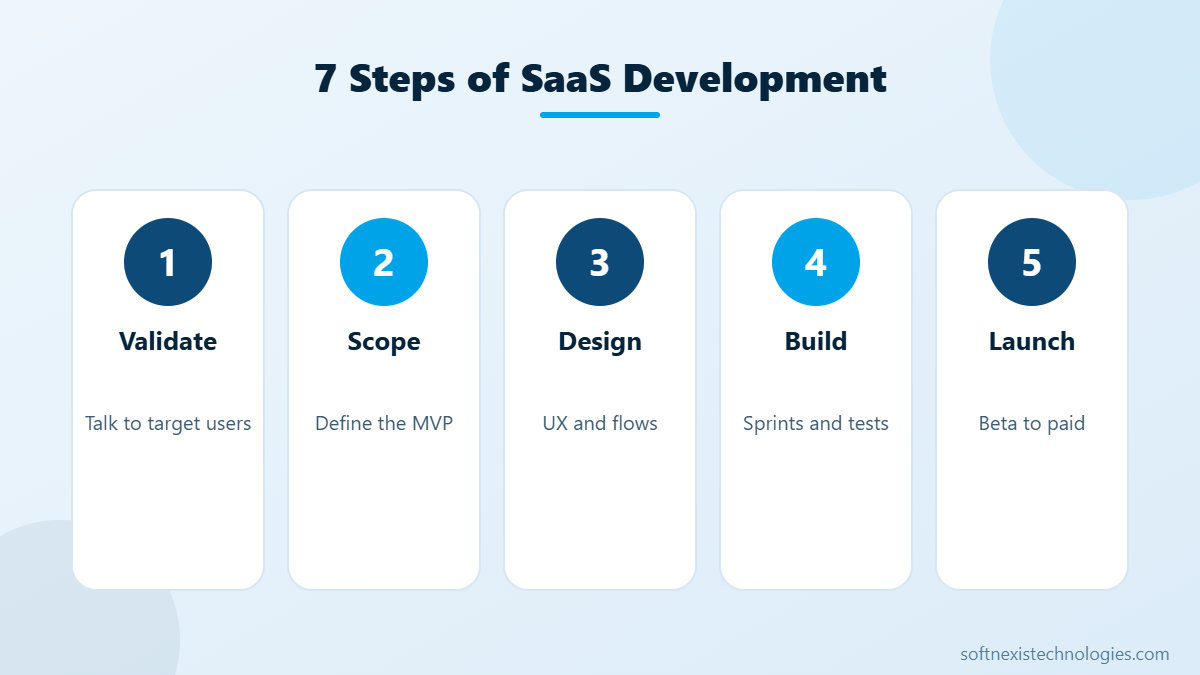
7 steps of SaaS development
- Validate the problem with at least ten interviews in your target market.
- Define the MVP with only the features needed to deliver core value. See our MVP development guide.
- Design the user experience with wireframes for onboarding and the main workflow.
- Plan architecture for multi-tenancy, permissions and data security.
- Build in sprints with automated tests and weekly demos.
- Launch a beta with early users and collect feedback.
- Iterate and scale based on usage data, churn and feature requests.
Key decisions in SaaS development
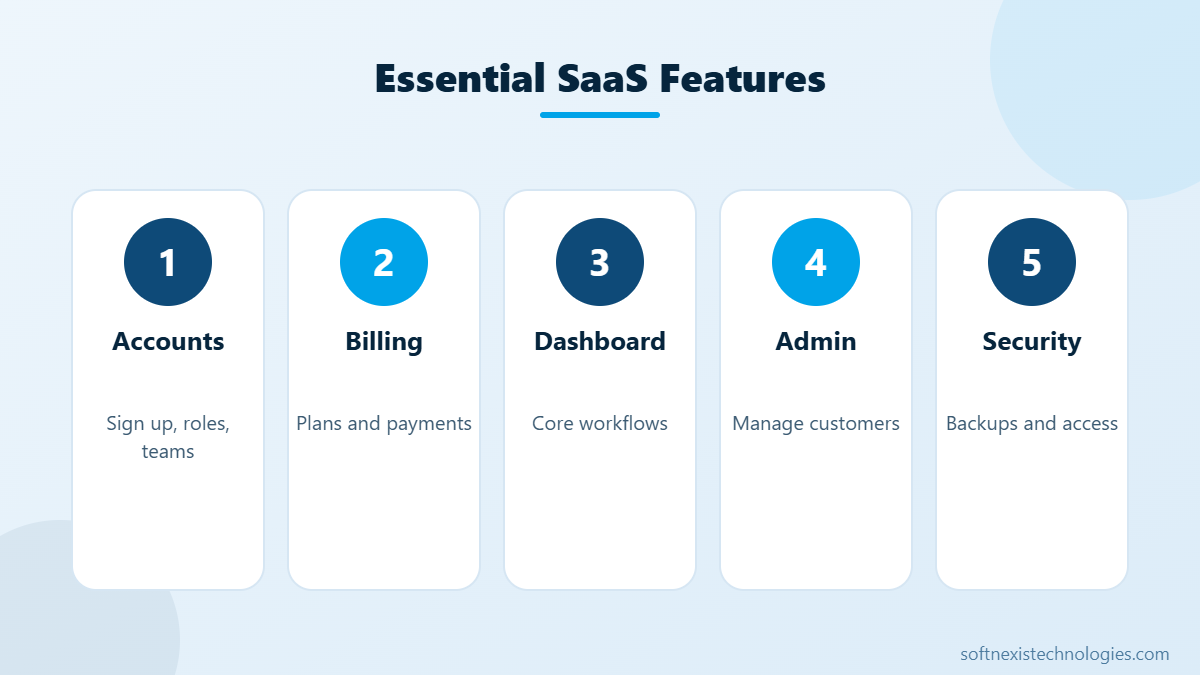
Multi-tenancy: most SaaS products use one application with data separated by customer account. Pricing: per user, per feature tier or usage-based. Security: encryption, two-factor login, audit logs and regular backups build customer trust. Marketing site: a fast, SEO-ready website drives sign-ups, as explained in web application vs website.
Common SaaS development mistakes
- Building too many features before finding paying users.
- Ignoring onboarding, so new users never reach the key value moment.
- Weak billing logic that causes failed payments and churn.
- No analytics, so you cannot see where users drop off.
SaaS development with Softnexis Technologies
Softnexis Technologies builds SaaS MVPs and platforms for startups and growing businesses, from product scoping and UI design to development, AI features and launch. We work in short sprints with weekly demos and full code ownership for you. Share your SaaS idea for a scoped plan within 24 hours.
Key takeaways: SaaS development
- SaaS development needs accounts, billing, multi-tenancy and security from day one.
- Validate the problem with real users before writing code.
- Launch a focused MVP, then iterate based on usage data.
- A fast marketing site drives sign-ups and trial users.
Successful SaaS development is a cycle of build, measure and learn. Keep the first version small, talk to users every week, and invest in onboarding and billing quality, because they directly affect growth and churn.
Your next step
Pick the two or three actions above that fit your situation, assign an owner and a deadline, and review the results after 30 days. Small, steady improvements add up quickly. If you would rather have experts handle it, the Softnexis Technologies team can audit your current setup, share a clear priority list and implement the changes for you. Talk to our team for a free consultation and a written plan within 24 hours.
SaaS development: FAQs
How long does SaaS development take?
A focused SaaS MVP usually takes three to five months. Larger platforms evolve continuously after launch.
What is the best tech stack for SaaS?
React or Next.js with Node.js, Laravel or Python, a PostgreSQL database and Stripe billing is a proven combination for most products.
Can I add AI features to my SaaS?
Yes. AI APIs can add smart search, document summaries, chatbots and workflow automation without training your own models.
Further reading
Plan your team with our dedicated development team guide. For subscription billing basics, see Stripe Billing.
Featured image by Freepik.